
How Fire Alarm Systems Save Lives During Emergencies
Cyrus India Securities | 16-Jun-2026
Introduction
Fire emergencies can occur
without warning, putting lives, property, and business operations at risk. In
such critical situations, every second counts. A well-designed fire alarm system
serves as the first line of defense by detecting fire hazards at an early stage
and alerting occupants immediately. Whether in commercial buildings, hotels,
hospitals, factories, or residential complexes, fire alarm systems play a vital
role in protecting lives and minimizing damage.
What Is a Fire Alarm System?
A fire alarm system is an
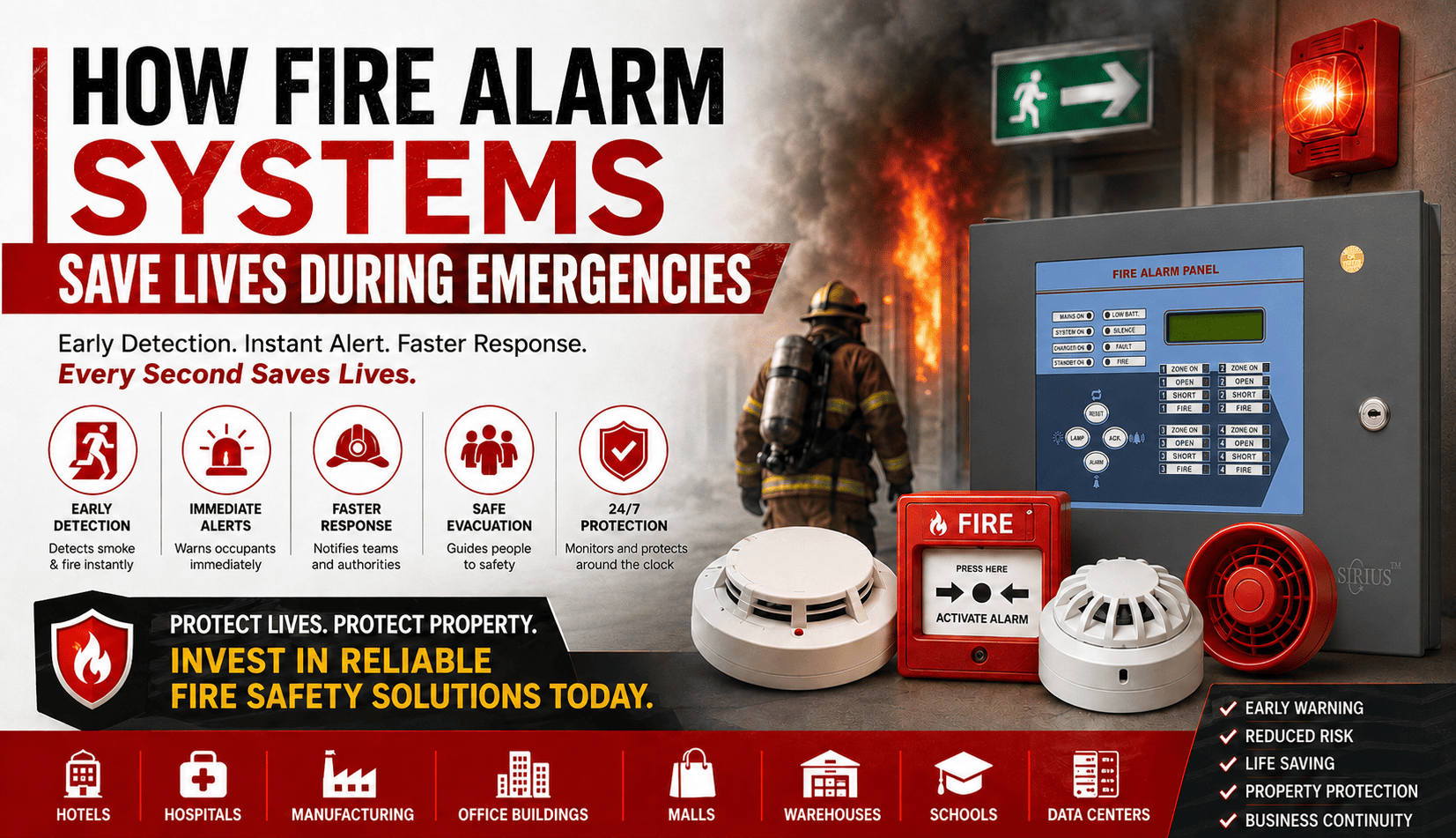
integrated network of devices designed to detect smoke, heat, or fire and
provide early warning signals. The system typically consists of smoke
detectors, heat detectors, manual call points, hooters, fire alarm control
panels, and notification devices that work together to alert building occupants
and emergency responders.
Why Early Fire Detection Matters
One of the most dangerous aspects
of a fire is that it can spread rapidly within minutes. Early detection allows
people to evacuate safely before smoke and flames become life-threatening.
Benefits of early fire detection
include:
- Faster evacuation of occupants
- Reduced risk of injuries and fatalities
- Quick response from emergency teams
- Prevention of large-scale property damage
- Reduced business downtime and financial losses
How Fire Alarm Systems Save Lives
1. Immediate Warning During
Fire Emergencies
The primary function of a fire
alarm system is to provide instant alerts when smoke or heat is detected.
Audible alarms and visual indicators notify everyone in the building, enabling
them to act quickly and move to designated safe zones.
2. Faster Emergency Response
Modern fire alarm systems can be
integrated with monitoring stations and emergency response services. Once
activated, the system can automatically notify security personnel, facility
managers, or fire departments, significantly reducing response time.
3. Safe and Organized
Evacuation
During emergencies, panic can
lead to confusion and accidents. Fire alarm systems provide clear warnings that
initiate evacuation procedures, helping occupants exit the building safely and
efficiently.
4. Protection During
Non-Working Hours
Many commercial facilities remain
unoccupied during nights, weekends, or holidays. Fire alarm systems continue
monitoring the premises 24/7, ensuring that any fire incident is detected even
when no one is present.
5. Reducing Smoke-Related
Fatalities
Studies show that smoke
inhalation is responsible for a significant percentage of fire-related deaths.
Early activation of fire alarms provides valuable time for occupants to escape
before smoke levels become dangerous.
6. Integration with Fire
Protection Systems
Advanced fire alarm systems can
be connected to sprinkler systems, fire suppression systems, smoke management
systems, and emergency lighting. This integrated approach helps contain the
fire and improves overall building safety.
Industries That Depend on Fire Alarm Systems
Fire alarm systems are essential
for:
- Hotels and Hospitality Facilities
- Hospitals and Healthcare Centers
- Manufacturing Plants
- Warehouses and Logistics Centers
- Educational Institutions
- Shopping Malls
- Commercial Office Buildings
- Residential Complexes
- Data Centers
Each facility requires a
customized fire detection solution based on its occupancy, risk level, and
regulatory requirements.
Conventional vs Addressable Fire Alarm Systems
Conventional Fire Alarm
Systems
- Suitable for small and medium-sized buildings
- Cost-effective solution
- Zone-wise fire indication
Addressable Fire Alarm Systems
- Ideal for large and complex facilities
- Pinpoints the exact location of a fire
- Faster troubleshooting and maintenance
- Enhanced monitoring capabilities
Selecting the right system
depends on building size, fire risk assessment, and compliance requirements.
Importance of Regular Maintenance
Even the most advanced fire alarm
system requires periodic inspection and maintenance to ensure reliable
operation.
Recommended maintenance activities
include:
- Detector cleaning and testing
- Battery inspection
- Panel functionality checks
- Hooter and notification device testing
- Wiring and connection verification
Regular maintenance helps ensure
compliance with fire safety standards and improves system reliability during
emergencies.
Compliance with Fire Safety Standards
Fire alarm systems should be
designed, installed, and maintained according to applicable fire safety
regulations and standards. Compliance helps organizations meet legal
requirements while ensuring the highest level of occupant safety.
Conclusion
Fire alarm systems are not just
regulatory requirements—they are life-saving technologies that provide critical
early warning during emergencies. By enabling rapid detection, timely
evacuation, and faster emergency response, these systems significantly reduce
the risk of injuries, fatalities, and property damage.
Investing in a reliable fire
alarm system is one of the most important decisions any organization can make
to protect people, assets, and business continuity. When properly designed and
maintained, a fire alarm system becomes a powerful safeguard against one of the
most devastating emergencies a building can face.
Protect Lives. Protect
Property. Invest in Reliable Fire Safety Solutions Today.
Reference:
multiple sources